


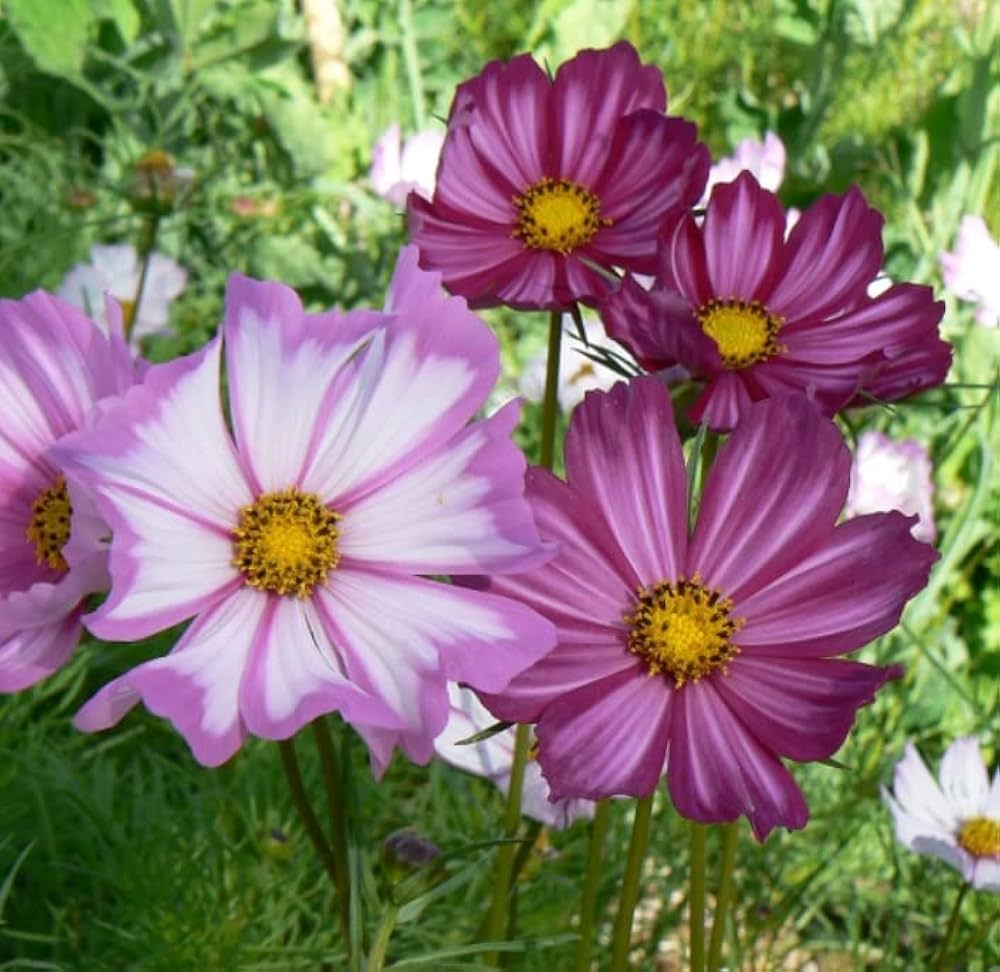
Cosmos Purple Red White Mix Flower Seeds for a Colorful Garden Display
Free Shipping on all Orders
Cosmos Pink Picotee Flower Seeds
Characteristics and Uses of Cosmos Pink Picotee Plants
Cosmos Pink Picotee features delicate white petals edged with soft pink to rose-colored margins, giving it a hand-painted appearance. These charming seeds for planting produce elegant blooms perfect for garden beds and bouquets. Their upright growth and fern-like foliage add airiness and movement to floral displays while attracting beneficial pollinators.
Growing Conditions for Cosmos Pink Picotee Plants
- Light Requirements: Full sun
- Soil Type: Loose, well-drained soil
- Soil pH: 6.0–7.0
- Temperature: Thrives between 65–85°F
Planting Tips for Cosmos Pink Picotee
- Direct sow after the last frost date or start indoors 4–6 weeks early.
- Plant 1/4 inch deep with 12-inch spacing.
- Thin to prevent overcrowding and promote air circulation.
Watering Instructions and Tips
- Water sparingly once plants are established.
- Allow soil to dry between waterings to prevent fungal issues.
- Avoid overly rich soils to encourage more blooms.
Growing Zones
- USDA Zones: 3–10 (as annuals)
- Global Zones: Suitable for warm to temperate climates worldwide
Key Benefits & Uses
- Unique pink-edged flowers for visual interest
- Long bloom period from mid-summer through fall
- Highly attractive to butterflies and bees
Best Uses in the Garden & Landscape
- Ideal for ornamental beds and borders
- Excellent in cottage gardens and wildflower meadows
- Perfect for cut flower arrangements
Conclusion
Cosmos Pink Picotee offers a painterly touch of elegance to your garden. Brought to you by Dhara Seeds—a big, trusted name in the seed world, offering a wide range of high-quality, non-GMO varieties to gardeners everywhere.
FAQ
Are Cosmos Pink Picotee deer-resistant?
Yes, they are generally unappealing to deer and make great additions to wildlife-friendly gardens.
Do they reseed easily?
They often self-sow in favorable conditions for repeat blooms the following year.
Can they grow in partial shade?
While they prefer full sun, they can tolerate light shade with fewer blooms.
Choose options