
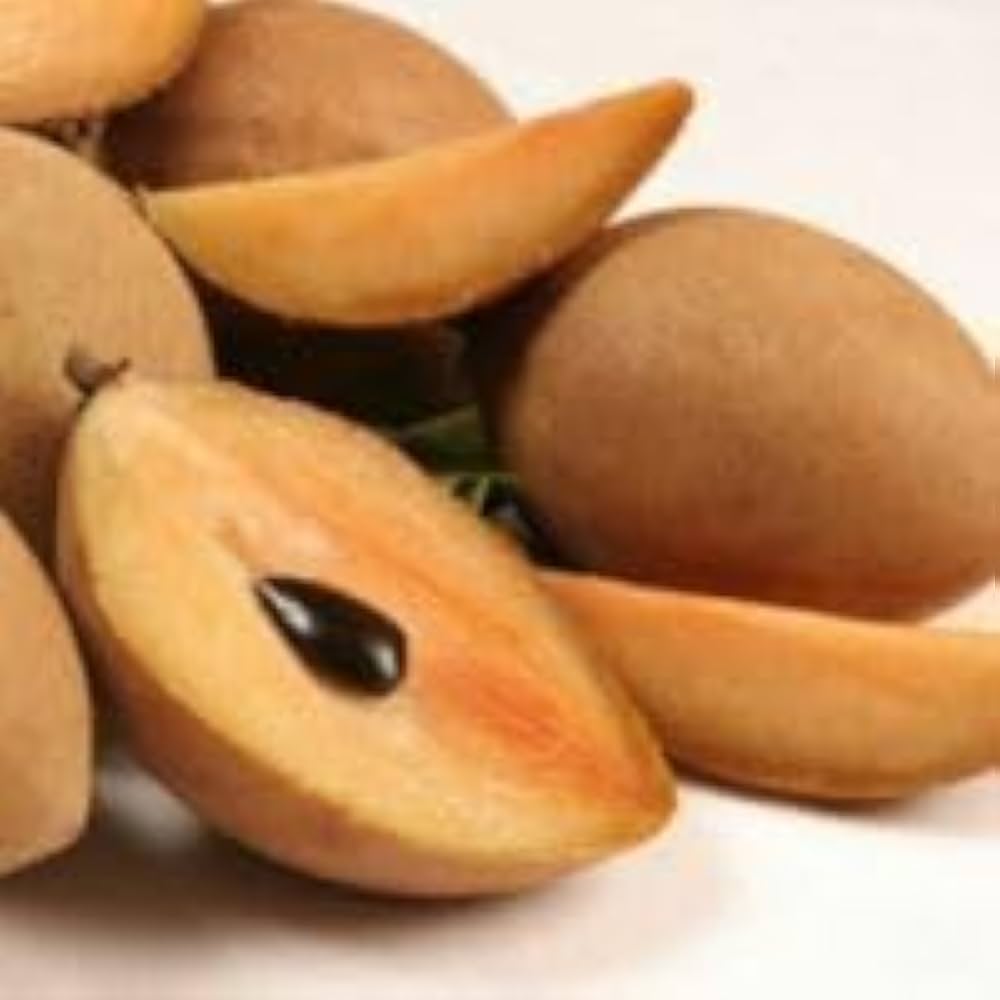


Sapota Fruit Seeds Manilkara zapota for Planting in Vegetable Patch
Free Shipping on all Orders
Sapota Fruit Seeds
Characteristics and Uses of Sapota Fruit
Sapota (Manilkara zapota), also known as Chiku, is a tropical fruit tree known for its sweet, brown, sugary fruit. The fruit has a creamy texture and is often eaten fresh or used in desserts and smoothies.
Growing Conditions for Sapota
- Light Requirements: Full sun
- Soil Type: Well-drained, sandy soil
- pH Range: 6.0–7.5
- Temperature: Prefers warm tropical or subtropical climates
Planting Tips for Sapota
Plant Sapota seeds in a sunny spot with rich, well-draining soil. Space the seeds about 20 feet apart for large trees. Keep the soil moist but not waterlogged.
Watering Instructions and Tips
Water the trees deeply, especially during dry spells. Once established, Sapota trees are drought-tolerant but will thrive with regular watering during the growing season.
Growing Zones
USDA Zones: 10–11
Global Zones: Best suited for tropical and subtropical regions.
Key Benefits & Uses
- Delicious fruit for fresh eating, desserts, and smoothies
- Rich in vitamins, fiber, and antioxidants
- Perfect for tropical or subtropical gardens
Best Uses in the Garden & Landscape
- Ideal for tropical and subtropical gardens
- Perfect for home orchards
- Great for growing in warm climates
Conclusion
Enjoy the sweet taste of Sapota fruit with seeds from Dhara Seeds, offering high-quality, non-GMO seeds for tropical gardens.
FAQ
How long does it take for Sapota to fruit?
Sapota trees typically start bearing fruit 3–5 years after planting.
Can Sapota be grown in containers?
Yes, Sapota can be grown in large containers, but it will need sufficient space for root growth.
Choose options