

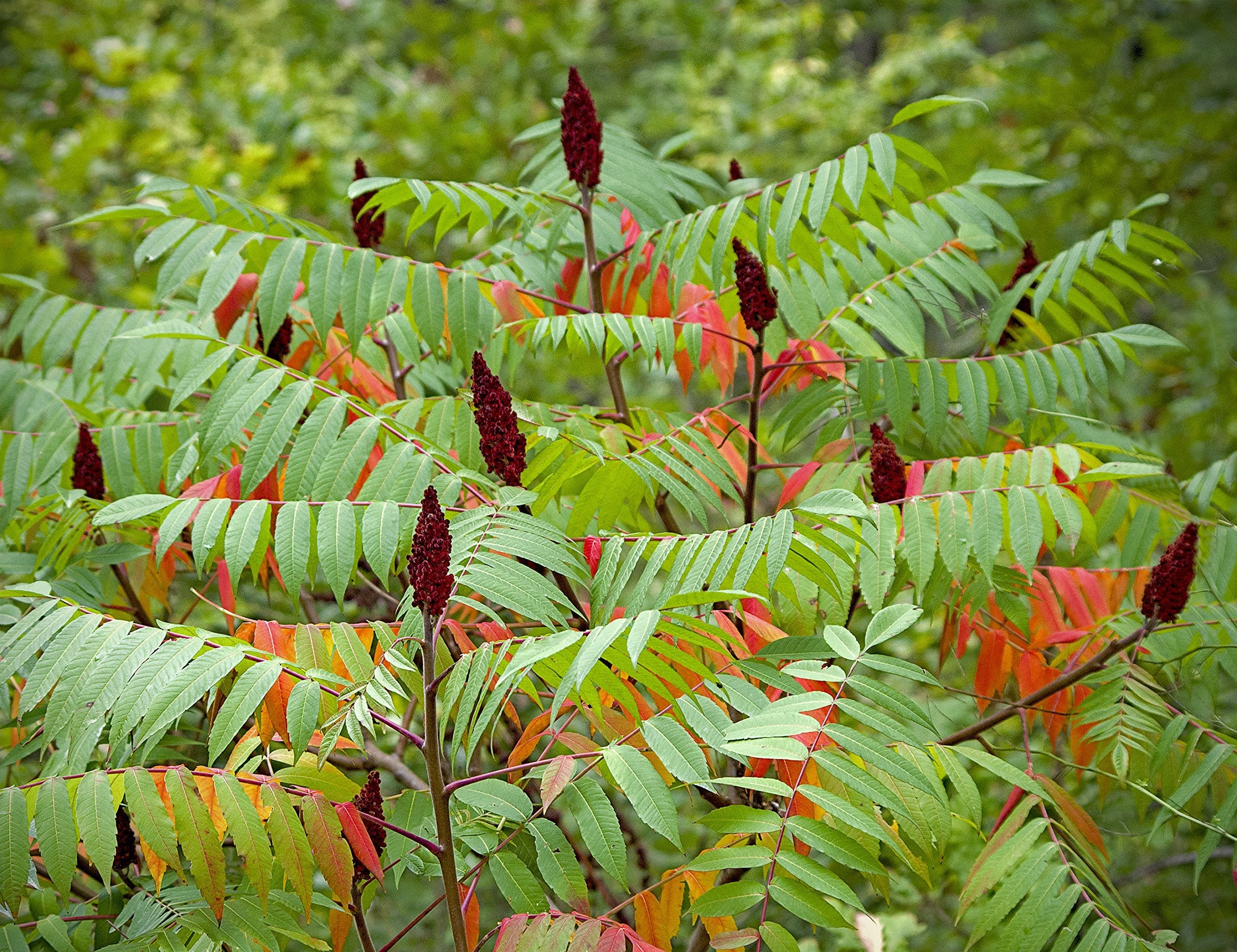

Sumac Rhus trilobata Plant Seeds for Planting in Landscape
Free Shipping on all Orders
Sumac Rhus Trilobata Plant Seeds
Characteristics and Uses of Sumac (Rhus Trilobata)
Sumac (Rhus trilobata), also known as the three-leaf sumac or skunk bush, is a deciduous shrub native to North America. It is characterized by its trifoliate leaves that turn red or orange in the fall and small, fuzzy red fruit clusters that are used to make tangy, lemony beverages in some cultures.
Growing Conditions for Sumac
- Light Requirements: Full sun to partial shade
- Soil Type: Prefers well-draining, slightly acidic soil
- Temperature: Tolerates a variety of climates, from hot summers to colder winters
- Soil pH: Slightly acidic (6.0 - 7.0)
Planting Tips for Sumac
- Start seeds indoors or sow directly outdoors in the spring after the danger of frost has passed.
- Space plants at least 3-5 feet apart to allow for their natural spread.
Watering Instructions and Tips
Water regularly during the growing season. Sumac is drought-tolerant once established, but benefits from occasional watering during dry periods.
Growing Zones
Suitable for USDA zones 3-8. Global zones: Temperate regions.
Key Benefits & Uses
- Native plant that supports local wildlife.
- Foliage turns vibrant colors in the fall, adding aesthetic value to your garden.
- Red berries are used in drinks and food by indigenous cultures.
Best Uses in the Garden & Landscape
Sumac is perfect for naturalizing areas, creating wildlife-friendly gardens, and adding autumn color to the landscape.
Conclusion
Dhara Seeds offers premium Sumac Rhus Trilobata seeds, ideal for creating native plantings and adding seasonal beauty to your garden.
FAQ
Can Sumac be grown in pots?
While Sumac grows best in the ground, it can be grown in pots if given enough space and proper drainage.
Choose options