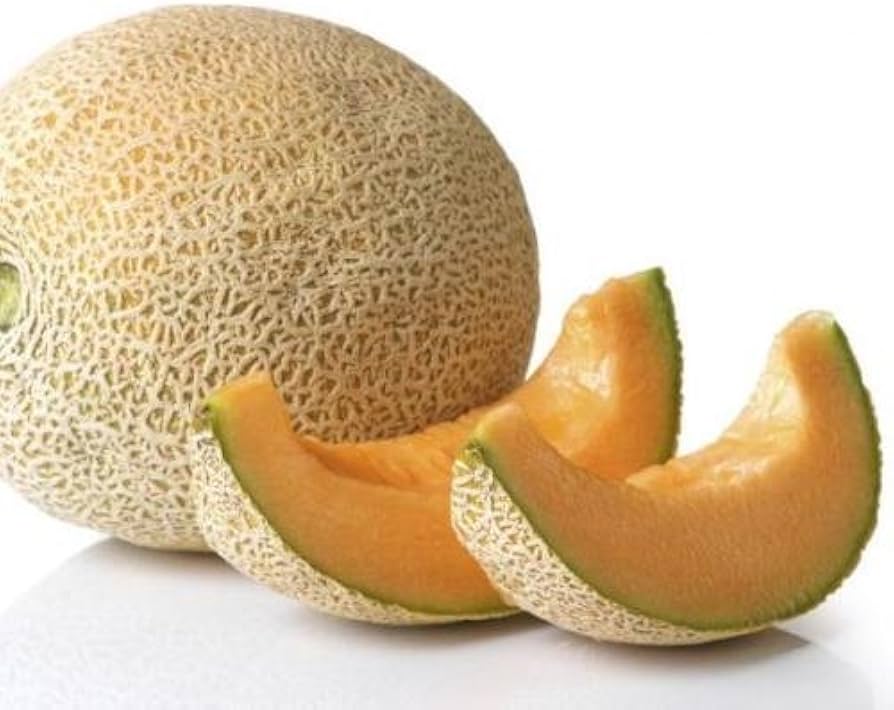
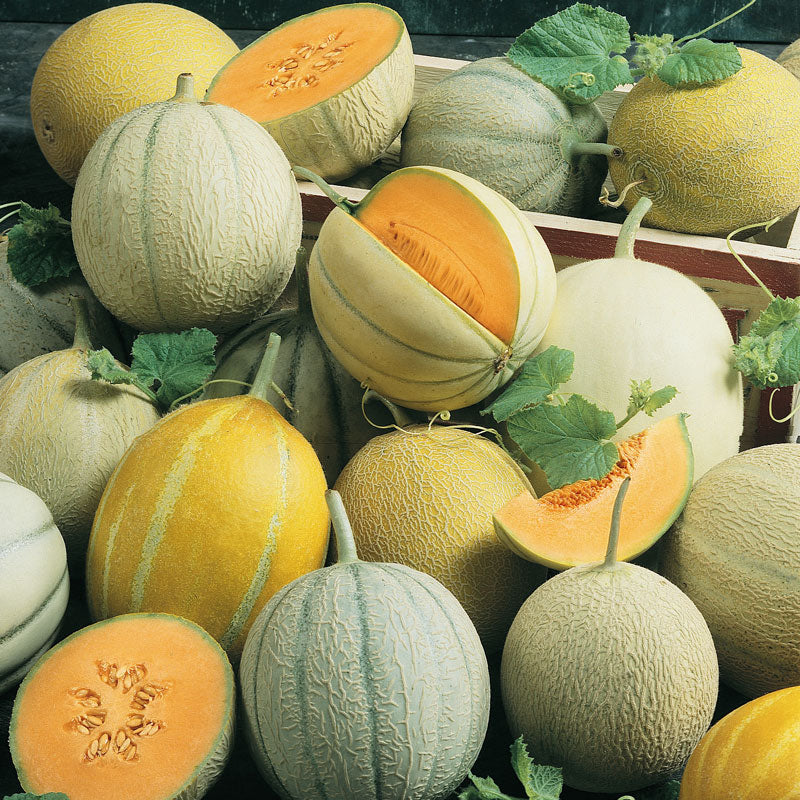
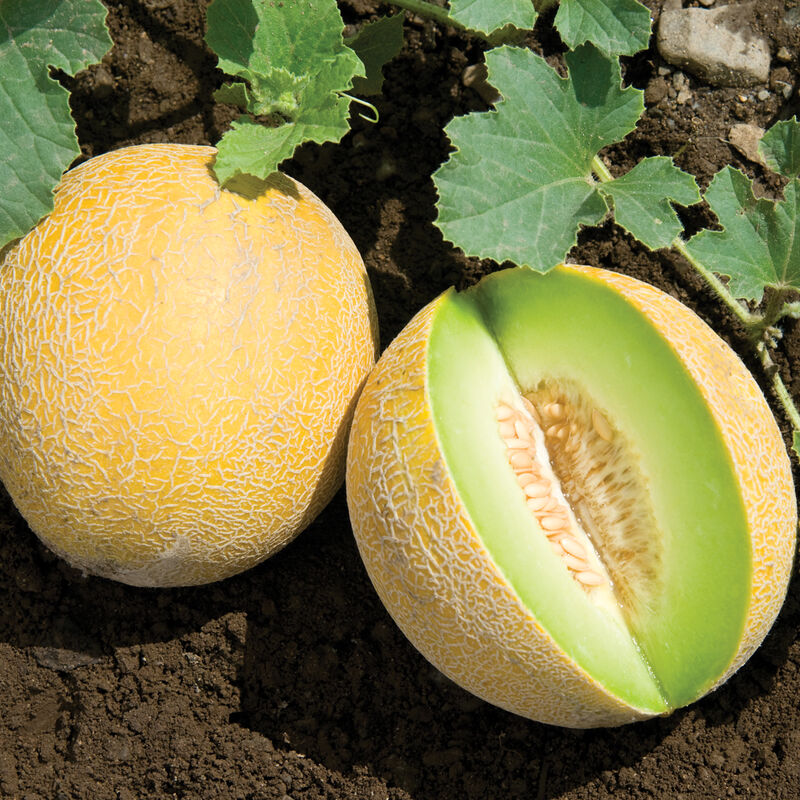
Galia melon vines bring a touch of old-fashioned summer beauty to the garden, with wandering greenery and delicate blossoms tucked among broad leaves. Their relaxed growth recalls sunny cottage plots, country garden paths, and warm afternoons spent tending a traditional melon patch.
Galia Melon Fruit Seeds are available from Evergrow Seeds at evergrowseeds.com, offering home gardeners an inviting way to add a distinctive warm-season melon to edible landscapes and backyard gardens.
Browse Our Galia Melon Fruit Seeds
Galia melon vines typically develop cheerful yellow to golden-yellow flowers among their green foliage. Seed-grown plants may naturally vary slightly in growth and fruit characteristics. Their spreading vines work beautifully in traditional vegetable gardens, edible landscapes, sunny cottage plots, and spacious raised-bed areas.
Plant Care Insights
Sunlight: Choose a warm location receiving abundant direct sunlight.
Soil: Plant in fertile, loose, well-draining soil rich in organic matter.
Watering: Maintain consistent moisture while avoiding persistently saturated ground.
Companion Plants: Consider compatible flowering herbs that attract bees and other pollinators.
Maintenance: Provide generous spreading room and keep competing weeds under control.
Frequently Asked Questions
How much garden space can Galia melon vines require?
Galia melon vines may spread several feet as they mature.
Actual spread varies according to growing conditions and plant vigor.
Which climates are suitable for growing Galia melons?
Galia melons generally favor climates with consistently warm summer conditions.
Cooler regions may benefit from a sufficiently long frost-free season.
What do Galia melon flowers typically look like?
The vines usually develop small yellow to golden-yellow blossoms.
Male and female flowers generally appear separately on the same plant.
Which pests may occasionally affect Galia melon plants?
Aphids, cucumber beetles, mites, and squash bugs may occasionally appear.
Regular inspections help gardeners identify potential pest activity early.
Shop By Category